

Psih. Mihaela Laura TIHAN[1], MSc, Psih. Eusebiu Jean TIHAN[2], MSc
eusebiu.tihan@gmail.com
[1] Tihan & Associates, Professional Civil Society of Psychology, Bucharest, Romani, ORCID: 0009-0003-1820-1417
[2] Academia Oamenilor de Știință – România, ORCID: 0009-0008-8316-3679
Abstract
This article analyzes the phenomenon of institutional capture and systemic impunity within the Romanian judicial system, using as a heuristic metaphor and explanatory paradigm the chess rule “Pièce touchée” (the touched piece). Starting from recent data on criminal prescription in Romania, the study explores the causal chain transposed from psychological anthropology and the sociology of deviance: social anomie – deviance – social pathology – organized crime. It demonstrates how political elites and trans-sectoral networks use tactics of the “J’adoube” (I adjust) type to reconfigure the normative framework in favor of white-collar crime, transforming the act of justice from an impartial arbiter into an instrument of selective protection. The decisions of the Romanian Constitutional Court (CCR) no. 297/2018 and no. 358/2022 are analyzed, alongside the High Court of Cassation and Justice (ÎCCJ) Decision no. 67/2022, which created a legislative vacuum during the period 2018–2022, allowing the retroactive application of ultra-prescription and the extinguishment of criminal action in over 9,635 high-level corruption cases. The article proposes the concept of the “institutional j’adoube principle” as a model of ex ante transparency and advances macro-structural and micro-institutional solutions for restoring the integrity of the rule of law.
Public Utility Statements: This study has direct relevance for public policy and for the strengthening of the rule of law, offering an original conceptual framework – the “protected piece rule” – which allows for the identification of mechanisms through which selective impunity becomes institutionalized. The use of the chess metaphor “Pièce touchée” and its procedural exception, “J’adoube”, provides decision-makers, magistrates, and professionals in the field of national security with a diagnostic tool for institutional vulnerabilities. The article proposes the concept of the “institutional j’adoube principle” as a model of ex ante transparency, with direct applicability in the reform of judicial and administrative procedures. Furthermore, the comparative analysis with Hungary and Poland offers lessons for preventing democratic regression in the Central and Eastern European region. By identifying the psychosocial and economic factors that favor white-collar crime, the study contributes to the development of integrated strategies for combating high-level corruption and recovering illicit assets, with a direct impact on the credibility of institutions and the investment climate.
Keywords: pièce touchée, white-collar crime, state capture, social anomie, impunity, J’adoube, social control, Travis Hirschi
Mecanica „piesei atinse” în capturarea statului: O analiză psihosociologică și antropologică a impunității în infracționalitatea de guler alb din România
Rezumat
Prezentul articol analizează fenomenul capturării instituționale și al impunității sistemice din sistemul judiciar românesc, utilizând ca metaforă euristică și paradigmă explicativă regula de șah „Pièce touchée” (piesa atinsă). Pornind de la datele recente privind prescripția penală din România, studiul explorează lanțul cauzal transpus din antropologia psihologică și sociologia devianței: anomie socială – devianță – patologie socială – criminalitate organizată. Se demonstrează cum elitele politice și rețelele trans-sectoriale folosesc tactici de tip „J’adoube” (aranjez) pentru a reconfigura cadrul normativ în favoarea criminalității de guler alb, transformând actul de justiție dintr-un arbitru imparțial într-un instrument de protecție selectivă. Sunt analizate deciziile Curții Constituționale a României (CCR) nr. 297/2018 și nr. 358/2022, alături de Decizia ÎCCJ nr. 67/2022, care au creat un vid legislativ în perioada 2018–2022, permițând aplicarea retroactivă a ultra-prescripției și stingerea acțiunii penale în peste 9.635 de dosare de mare corupție. Articolul propune conceptul de „principiu instituțional j’adoube” ca model de transparență ex ante și avansează soluții macrostructurale și micro-instituționale pentru restabilirea integrității statului de drept.
Declarații de utilitate publică: Prezentul studiu are o relevanță directă pentru politici publice și pentru consolidarea statului de drept, oferind un cadru conceptual original – „regula piesei protejate” – care permite identificarea mecanismelor prin care impunitatea selectivă se instituționalizează. Utilizarea metaforei șahiste „Pièce touchée” și a excepției sale procedurale, „J’adoube”, oferă decidenților, magistraților și profesioniștilor din domeniul securității naționale un instrument de diagnosticare a vulnerabilităților instituționale. Articolul propune conceptul de „principiu instituțional j’adoube” ca model de transparență ex ante, cu aplicabilitate directă în reforma procedurilor judiciare și administrative. De asemenea, analiza comparativă cu Ungaria și Polonia oferă lecții pentru prevenirea regresului democratic în regiunea Europei Centrale și de Est. Prin identificarea factorilor psihosociologici și economici care favorizează criminalitatea de guler alb, studiul contribuie la dezvoltarea unor strategii integrate de combatere a corupției de mare nivel și de recuperare a activelor ilicite, cu impact direct asupra credibilității instituțiilor și a climatului investițional.
Cuvinte-cheie: Pièce touchée; criminalitate de guler alb; capturarea statului; anomie socială; impunitate; J’adoube; control social; Travis Hirschi
INTELLIGENCE INFO, Volumul 5, Numărul 4, Decembrie 2026, pp. xxx
ISSN 2821 – 8159, ISSN – L 2821 – 8159, DOI: 10.58679/II42065
URL: https://www.intelligenceinfo.org/en/the-mechanics-of-the-touched-piece-in-state-capture/
© 2026 Laura Mihaela TIHAN, Eusebiu Jean TIHAN. Responsabilitatea conținutului, interpretărilor și opiniilor exprimate revine exclusiv autorilor.
CC BY 4.0 License
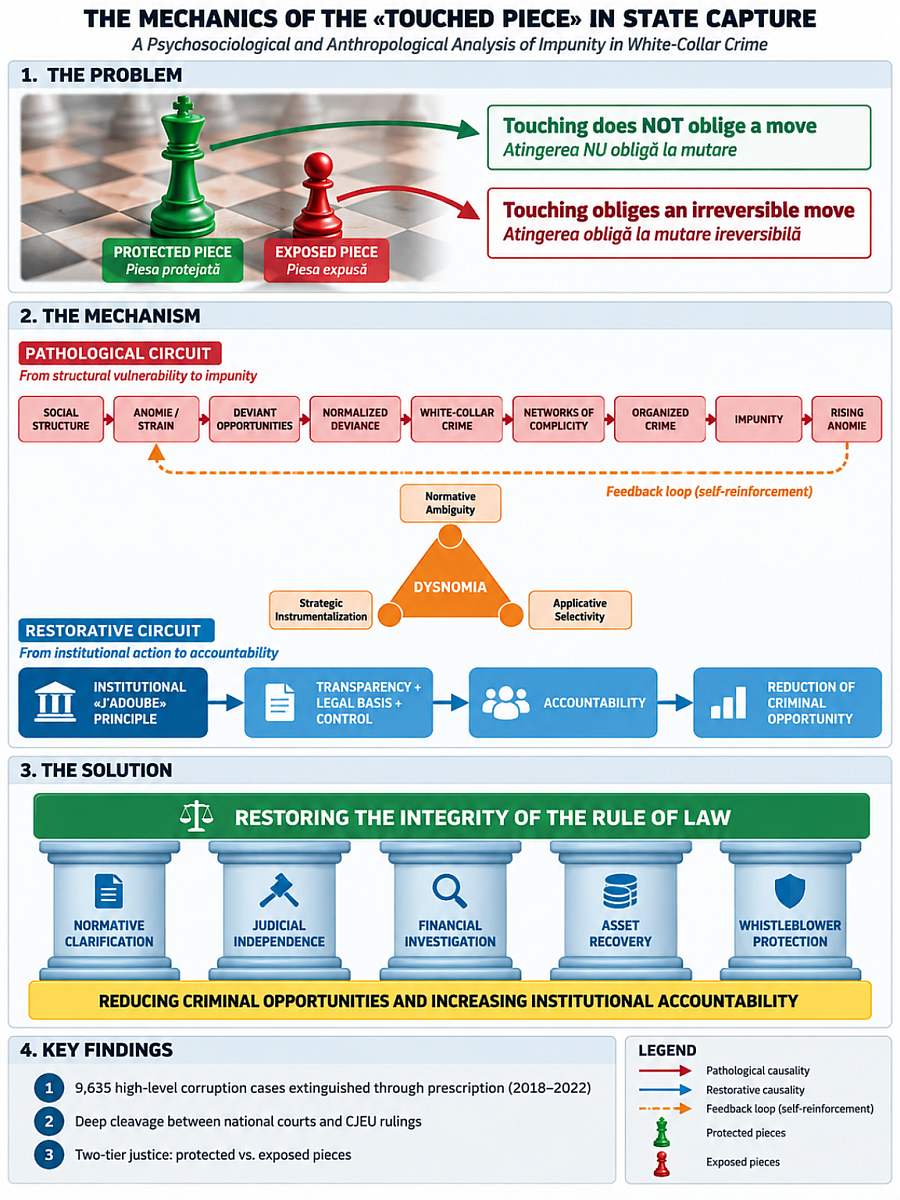
1. INTRODUCTION
In game theory and in the analysis of strategic behavior, chess offers a rigorous model of interaction governed by fixed rules. However, transposed into the macro-political and judicial space, the normative order suffers profound distortions when the actors responsible for applying the rules become asymmetric competitors. In this context, the international rule “Pièce touchée” (the touched piece, the moved piece no longer moves) postulates the obligation to fully assume any physical contact with a game piece. If the piece is touched, its move or capture becomes imperative, prohibiting arbitrary reconsideration of the decision (FIDE, 2023)[3].
This rule protects a fundamental principle: touching produces obligation. It prevents “exploratory touches,” test gestures, touches without consequences. In chess, you cannot touch a piece, observe the opponent’s reaction, and then retroactively declare that you were merely “adjusting.” One single exception exists: J’adoube (“I adjust”). If you want to reposition a piece without moving it, you must clearly announce your intention before touching it. Otherwise, the touch counts as an irreversible commitment (FIDE, 2023).[4]
This article uses the concept of “Pièce touchée” as an analytical grid to examine the current dynamics of Justice in Romania, marked by a severe cleavage between the decisions of national courts, the rulings of the Court of Justice of the European Union (CJEU), and international monitoring reports (such as the U.S. Department of State Report of October 1, 2026, on the investment climate). The central premise of the work is that the justice system in Romania has undergone a process of neo-patrimonial reconfiguration, in which the “pieces” of the system (political actors, magistrates, economic operators) are touched and moved in a controlled manner through strategic legislative artifices, transforming a perceived stability crisis into a structural crisis of impunity (European Commission, 2026).[5]
The present article starts from the observation that, in the field of combating economic and organized crime, a parallel, unwritten rule operates, which we call the “protected piece rule.” According to this rule, some “pieces” — persons, economic entities, political-economic networks — can be touched without being moved, while others are moved irreversibly upon first touch. The distinction does not depend on the gravity of the act, but on the position of the piece on the board of power (Passas, 2017).[6]
The text below first reconstructs the pathological chain that makes this rule possible (anomie → deviance → social pathology → organized crime), then applies the chess grid to the handling of criminal cases, with reference to the Romanian case, and concludes with a discussion of possible solutions.
1.1 Declarations on the Novelty of the Article
The present article introduces a series of elements of conceptual and methodological novelty in the analysis of systemic impunity and white-collar crime.
First, it proposes the use of the chess rule “Pièce touchée” and its procedural exception, “J’adoube”, as a heuristic metaphor and original analytical grid for understanding the mechanisms through which selective impunity becomes institutionalized. This approach allows for overcoming simplistic explanations based on “institutional capture” and offers a more nuanced conceptual framework, centered on the distinction between “protected pieces” and “unprotected pieces.”
Second, the article synthesizes two classical sociological theories – Merton’s theory of structural anomie and Hirschi’s social control theory – into an integrated explanatory model that reconstructs the pathological chain anomie → deviance → social pathology → organized crime → institutionalized impunity. This synthesis allows for an understanding of how transitional elites redirect their social bonds toward endogamous networks that validate criminal behavior as a norm of success.
Third, the article proposes the original concept of the “institutional j’adoube principle,” defined as the obligation of a public authority to make transparent the intention, competence, legal basis, purpose, and limits of an institutional intervention before it produces significant effects on the rights or legitimate interests of a person. This principle offers an operational model for ex ante transparency, opposed to the practice of retroactive “arrangement” that characterizes selective impunity.
Fourth, the article offers an original comparative analysis of the models of institutional capture in Romania, Hungary, and Poland, highlighting the major methodological differences in the application of the “J’adoube” tactic and their implications for applied psychology in national security.
Fifth, the article integrates recent institutional data on criminal prescription in Romania, analyzing CCR decisions no. 297/2018 and no. 358/2022, alongside ÎCCJ Decision no. 67/2022, and demonstrating how these created a legislative vacuum strategically exploited to produce retroactive impunity.
Sixth, the article proposes a series of macro-structural and micro-institutional solutions for restoring the integrity of the rule of law, including the strengthening of financial investigation, the recovery of illicit assets, the protection of whistleblowers, and the depoliticization of judicial inspection.
1.2 Applied Psychology in National Security: A Conceptual Introduction
Applied psychology in the field of national security constitutes an epistemic field in which fundamental psychological knowledge is transposed into practices of evaluation, intervention, and analysis of individual and collective behaviors that affect the security of the state and citizens (Moghaddam, 2005).[7] Within this field, the study of white-collar crime and the institutional mechanisms that make it possible or block it represents an area of investigation with direct relevance for national security, insofar as high-level corruption erodes the state’s capacity to exercise its fundamental functions of defense, public order, and justice (Rose-Ackerman & Palifka, 2016).[8]
The present work starts from the observation that, in legal systems in transition or subject to significant institutional pressures, an unwritten rule operates – which we call the “protected piece rule” – according to which some “pieces” (persons, economic entities, political-economic networks) can be touched without being moved, while others are moved irreversibly upon first touch. This rule is not derived from the gravity of the act, but from the position of the piece on the board of power. It contradicts a fundamental principle of the rule of law: that touching produces obligation, and obligation is irreversible (Fuller, 1964).[9]
To understand the psychosocial mechanisms that make this distortion possible, the article uses two complementary theoretical frameworks. The first is the theory of structural anomie formulated by Robert K. Merton, which explains deviance as an adaptive response to the disjunction between valued cultural goals (material success, social status) and unequal access to legitimate means of achieving them (Merton, 1938).[10] The second is Travis Hirschi’s social control theory, which inverts the classic criminological question: instead of asking why some individuals break the law, Hirschi asks why most people obey it, and the answer lies in the intensity of social bonds – attachment, commitment, involvement, and belief (Hirschi, 1969).[11]
The combination of these two perspectives allows for the construction of an integrated explanatory model, in which social and institutional anomie favor the emergence of deviant opportunities, the normalization of rule-breaking, and the constitution of networks of complicity that cross the boundaries between economic, political, and judicial (Passas, 2017)[12]. In this model, impunity no longer appears as an accident or as a consequence of administrative inefficiency, but as a structural product of deliberate mechanisms of retroactive “arrangement” of the rules of the game.
The synthesis of the two theoretical frameworks – Merton’s structural anomie and Hirschi’s social control theory – allows for the construction of an integrated explanatory model of institutionalized impunity, which we present in Figure 1.
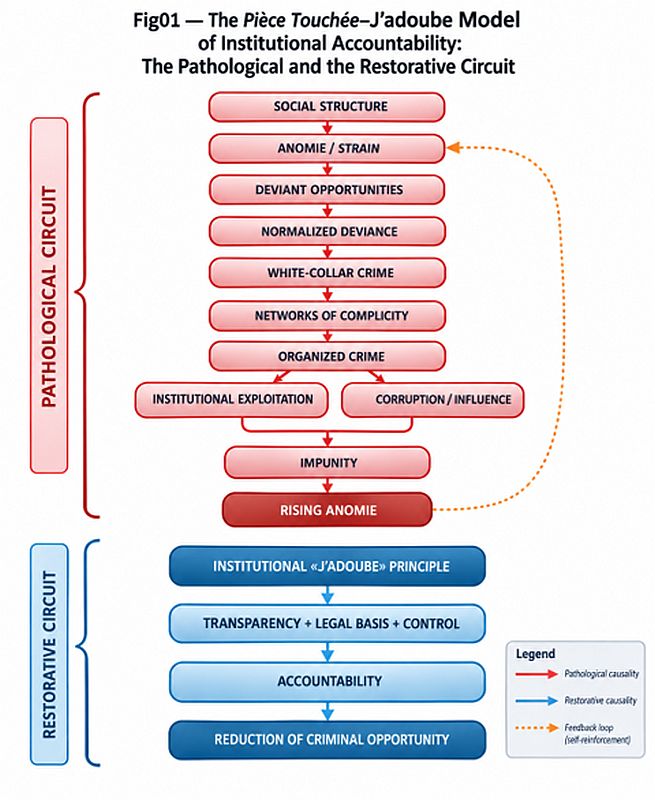 Figure 1. The Pièce Touchée–J’adoube Model of Institutional Accountability: The Pathological and the Restorative Circuit
Legend: The figure illustrates two parallel circuits. The upper circuit (pathological), marked in red, starts from “Social Structure” and runs vertically, through descending arrows, through the following nodes: “Anomie/Strain” → “Deviant Opportunities” → “Normalized Deviance” → “White-Collar Crime” → “Networks of Complicity” → “Organized Crime.” From “Organized Crime,” two converging arrows branch out toward “Institutional Exploitation” and “Corruption/Influence,” which unite in the node “Impunity.” From “Impunity,” a descending arrow leads to “Rising Anomie,” and a feedback arrow (dotted line) returns to “Anomie/Strain,” indicating the self-reinforcement of the cycle. The lower circuit (restorative), marked in blue, starts from the box “Institutional «J’adoube» Principle” and runs through: “Transparency + Legal Basis + Control” → “Accountability” → “Reduction of Criminal Opportunity.” The arrows indicate causal relations; the dotted line marks the positive feedback loop.
As can be observed in Figure 1, the two circuits are not independent: the more the pathological circuit self-reinforces through the feedback of anomie, the more difficult it becomes to activate the restorative circuit, which explains why selective impunity tends to become institutionalized in the absence of external intervention.
Methodologically, the article uses a qualitative, exploratory, and interdisciplinary approach, combining conceptual analysis, criminological analysis, documentary analysis, and secondary analysis of European and Romanian institutional sources. Documents from the European Commission, OECD, National Anticorruption Directorate, and relevant international organizations for combating corruption and organized crime are examined. The analysis highlights that institutional vulnerabilities should not be automatically equated with the existence of a general “capture” of justice, and that criminal prescription cannot in itself be interpreted as proof of guilt or of an institutional intention to favor.
The structure of the article is as follows: section two presents the theoretical foundations of anomie and social control; section three analyzes the psychosocial factors of white-collar crime; section four examines the technical mechanism of prescription as an instrument of impunity; section five proposes a comparative analysis in the Central and Eastern European region; section six formulates the “institutional j’adoube principle”; section seven discusses the implications for public policies; the conclusions synthesize the theoretical and practical contributions.
2. PSYCHOSOCIAL AND ECONOMIC FACTORS FAVORING WHITE-COLLAR ORGANIZED CRIME
2.1 Structural Anomie and the Tension between Goals and Means
The theoretical starting point is Robert K. Merton’s theory of anomie. Merton starts from the observation that modern society strongly emphasizes cultural goals — especially material success — without ensuring structurally equal access to legitimate means of achieving them. The result is a tension (strain) which, when chronicized, makes deviance a rational adaptation strategy, not a simple individual pathology (Merton, 1938).
Merton identifies five modes of adaptation: conformity, innovation, ritualism, retreatism, and rebellion. Economic crime and organized crime correspond primarily to innovation: achieving culturally approved goals (wealth, status, power) through illegal means. The crucial element, however, is the following: when deviant innovation is repeated and not sanctioned, it ceases to be an individual deviation and becomes a group norm (Merton, 1957).[13]
2.2 Global Anomie and Criminogenic Asymmetries
Nikos Passas developed this perspective in Global Anomie Theory. The central thesis: neoliberal globalization produces criminogenic asymmetries — structural gaps between globally propagated aspirations and locally available legitimate means. Mass media and social networks export models of material success into societies where legitimate social mobility is blocked or slow. The result is not necessarily an immediate increase in crime, but the erosion of the legitimacy of norms and the emergence of niches in which deviant behavior becomes functional (Passas, 2000).[14]
Passas introduces here the concept of dysnomia — distinct from anomie. If classical anomie describes the absence or collapse of norms, dysnomia describes the ambiguity, instrumentalization, and selectivity of norms. Norms do not disappear; they become negotiable. This is the structural condition that makes selective impunity possible: not the absence of law, but its differentiated application (Passas, 2017).[15]
To clarify the relationship between dysnomia and selective impunity, we propose the triangular representation in Figure 2.
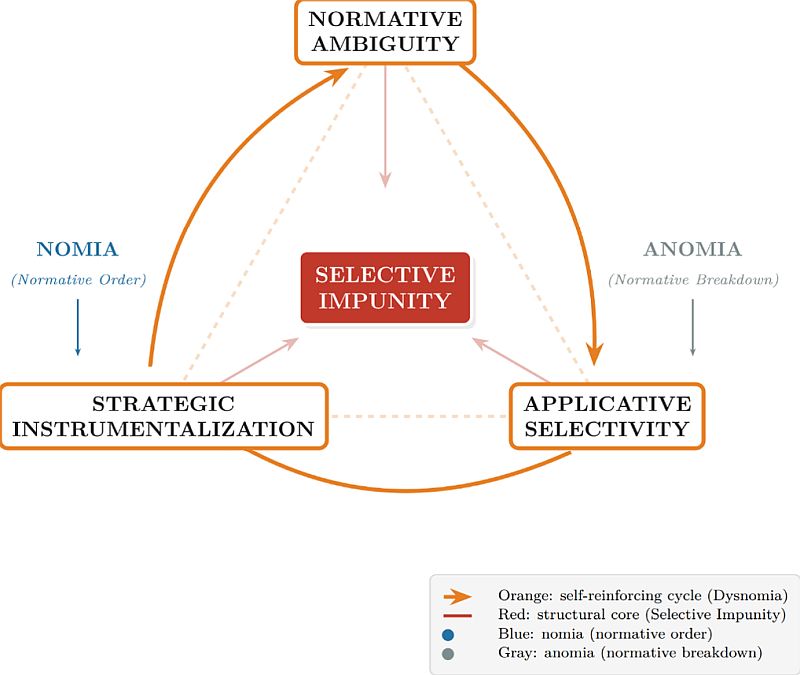 Figure 2. The Dysnomia Triangle: Ambiguity, Instrumentalization, and Selectivity as Sources of Selective Impunity
Legend: The figure presents an equilateral triangle with the vertices “Normative Ambiguity,” “Strategic Instrumentalization,” and “Applicative Selectivity.” At the center of the triangle is “Selective Impunity.” Circular arrows connect the three vertices, forming a self-reinforcing cycle. Outside the triangle, on the left is positioned “Nomia” (blue), and on the right “Anomia” (gray), to show that dysnomia occupies an intermediate position between the two. The orange shades mark the dysnomia zone. The arrows indicate relations of reciprocal causality.
The triangle in Figure 2 shows that dysnomia is not a static state, but a dynamic process: normative ambiguity favors strategic instrumentalization, which in turn produces applicative selectivity, and selectivity reinforces ambiguity, in a cycle that makes impunity a structural condition, not an accident.
2.3 Concrete Economic Factors
At the empirical level, the literature on economic criminology identifies a series of factors that make a sector or an economy vulnerable to the infiltration of organized crime:
- low barriers to entry and fierce competition;
• poorly qualified workforce and reduced mobility;
• ambiguous or unstable regulation;
• weak surveillance capacities and inconsistent sanctions;
• overlaps between the legal and illegal economy (construction, public procurement, recycling, gambling, real estate).
A report by Morselli, Gabor, and Kiedrowski (2010) notes that symbiotic relationships between criminal and legitimate actors have become more organized, and the distribution of income within criminal organizations is extremely unequal — approximately 20% of participants obtain about 80% of revenues. This confirms that organized crime is not a pathology of poverty, but a rational economic structure, with peaks that communicate permanently with legitimate elites (Morselli et al., 2010).[16]
2.4 The Psychosocial Level: Rationalization and Neutralization of Guilt
According to the theory of neutralization (Sykes & Matza, 1957), white-collar offenders use specific cognitive techniques to justify their actions: denial of injury (public funds being seen as nobody’s property) and appeal to higher loyalties (the political group or clientelistic network). Impunity legalized through technical mechanisms (such as prescription) acts as a psychological amplifier: the absence of concrete sanction dissolves cognitive dissonance, validating the offender’s high social status and transforming the offense into a norm of behavioral success (Sykes & Matza, 1957).[17]
3. PSYCHOLOGICAL ANTHROPOLOGY: SOCIAL CONTROL (TRAVIS HIRSCHI) AND NORMATIVE DEGRADATION
To understand the depth of the triggering of the chain anomie–deviance–social pathology among elites, the Mertonian paradigm (Merton, 1938) regarding the structural disjunction between cultural goals and legitimate means must be complemented by the Theory of Social Control or Social Bonds formulated by Travis Hirschi (1969). While classical theories of deviance analyze the springs of law-breaking, Hirschi’s approach questions the causes of normative conformism. The answer lies in the intensity and integrity of the bonds that unite the individual to society (Hirschi, 1969).[18]
Hirschi identifies four fundamental elements of the social bond: attachment, commitment, involvement, and belief.
Applied to the dynamics of white-collar crime and state capture, we witness a perverse anthropological mutation of these pillars (van Onna, 2020)[19]:
- Attachment (Affectively redirected): The loyalty of structural actors (magistrates, decision-makers) is diverted from the social body and constitutional values toward the criminal network group. The psychological validation of the “protected piece” comes exclusively from within the endogamous loop of captured power, nullifying the fear of public opprobrium.
- Commitment (Investment in impunity): Instead of individuals refraining from crime in order not to lose their legitimately acquired status, in the captured state actors invest their social capital precisely in building an apparatus of impunity. The cost of conformity becomes higher than that of deviance; massive immunity secures illegal profit, reducing risk to zero.
- Involvement (Saturation of institutional time): The logistical and temporal resources of key institutions (Parliament, Superior Courts, Judicial Inspection) are monopolized by defensive legislative arrangements. Institutional time is consumed for producing procedural exceptions, emptying the judicial apparatus of its primary repressive function.
- Belief (Dissolution of normative validity): When supreme courts explicitly order the ignoring of CJEU decisions, a structural anthropological fracture occurs. If the apex of the judicial pyramid denies the supremacy of European law, the internal moral code of the social body collapses, normalizing pathology.
To illustrate how the four pillars of the social bond identified by Hirschi are diverted in the context of state capture, we propose the graphic representation in Figure 3.
 Figure 3. The Anthropological Mutation of the Four Social Bonds (Hirschi) in the Context of State Capture
Legend: The figure is organized in the form of four quadrants arranged in a cross, each corresponding to one of the elements of the social bond. Quadrant 1 – Attachment: an arrow starts from “Social body / Constitutional values” and is diverted toward “Endogamous criminal group”; the explanatory text is “Affectively redirected.” Quadrant 2 – Commitment: a balance scale tilted toward “Investment in impunity,” to the detriment of “Legitimate status”; the explanatory text is “Cost of conformity > Cost of deviance.” Quadrant 3 – Involvement: a clock showing “Institutional time” consumed by “Defensive legislative arrangements”; the explanatory text is “Saturation of institutional time.” Quadrant 4 – Belief: a judicial pyramid with the apex “Supreme courts” ignoring “CJEU,” and the base “Social body” collapsing; the explanatory text is “Dissolution of normative validity.” The gray shades mark the diverted elements, and the red lines mark the anthropological fractures.
Figure 3 suggests that white-collar deviance is not the product of individuals without social bonds, but of individuals whose bonds have been redirected toward endogamous networks that validate criminal behavior as a norm of success.
4. THE TECHNICAL MECHANISM OF PRESCRIPTION AS A LEGAL INSTRUMENT OF CONTROL
In the modern legislative architecture, the institution of criminal prescription is conceived as a guarantor of legal security and the right to a fair trial within a reasonable time. However, in states under the incidence of institutional capture, prescription is transformed from a defensive procedural guarantee into an offensive instrument of control and systemic impunity (Ashworth, 2013).[20]
The technical analysis of the phenomenon in Romania highlights a pattern of coordinated jurisprudential manipulation. Through Decisions no. 297/2018 and no. 358/2022 of the Romanian Constitutional Court (CCR), alongside Decision no. 67/2022 of the High Court of Cassation and Justice (ÎCCJ) – the Panel for the resolution of legal issues, a veritable legislative vacuum was created during the period 2018–2022 regarding the causes of interruption of the prescription course. This window of normative opportunity was extensively interpreted as more favorable criminal law (mitior lex), allowing the retroactive application of ultra-prescription (Romanian Constitutional Court, 2018, 2022).[21]
The direct consequence, also recorded by the U.S. Department of State report, consists in the extinguishment of criminal action in over 9,635 cases of high-level corruption and organized economic crime. From a legal point of view, the strategic use of prescription presents advantages superior to a classical amnesty for white-collar networks (U.S. Department of State, 2026)[22]:
- Absence of direct political assumption: An amnesty law adopted by Parliament generates an immense political and electoral cost, provoking vehement reactions from civil society and international partners. Instead, prescription arising through technical decisions of superior courts transfers responsibility to the “passive imperfection of the system” or omissions of legislative technique.
- The effect of definitive erasure: Unlike the suspension of proceedings or formal defects that allow retrial, the fulfillment of the prescription term definitively extinguishes the legal relationship of criminal conflict. The piece is withdrawn from the board, keeping intact the financial assets obtained illicitly, eliminating the risk of extended confiscation.
4.1 Retroactive J’adoube: Prescription as a Technology of Impunity
The Romanian case of prescription offers an almost didactic illustration. It is not about the fact that prescription exists — it exists in almost all legal systems. It is about how it can be used as an instrument of retroactive “arrangement.” When thousands of corruption cases are closed through prescription, and the relevant decisions are taken at the constitutional level at moments that coincide with political cycles, the message transmitted is not “legality has been respected,” but “touching does not oblige a move if the piece is important” (European Commission, 2026).[23]
A report on the implementation of artificial intelligence in combating corruption in the EU shows that the adoption of AI tools is extremely unequal: states such as Italy, Germany, and the Netherlands are advanced, while Romania, Bulgaria, and Croatia have not implemented AI tools dedicated to combating corruption. This asymmetry is not neutral: where technological tools are lacking, human discretion and political pressure remain masters of the decision to touch (Petriashvili, 2026).[24]
The temporal mechanism of prescription as a technology of impunity is illustrated in Figure 4.
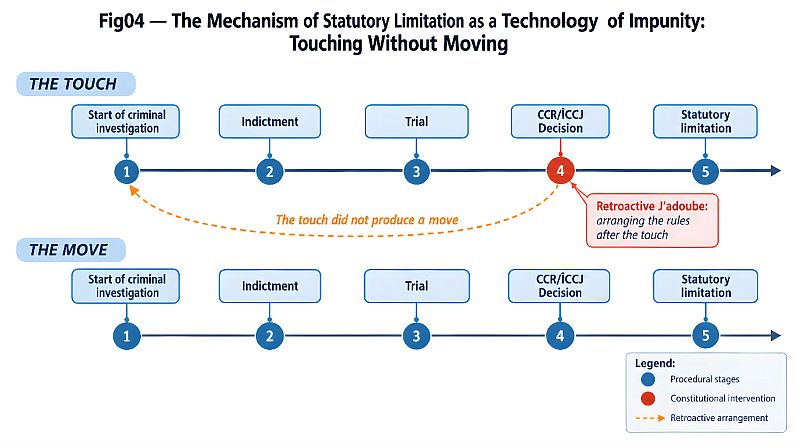 Figure 4. The Mechanism of Statutory Limitation as a Technology of Impunity: Touching Without Moving
Legend: The figure presents a horizontal timeline with the stages of a high-level corruption case: “Start of criminal investigation” → “Indictment” → “Trial” → “CCR/ÎCCJ Decision” → “Statutory limitation.” Above the line is marked “THE TOUCH” (the moment of touching the piece), and below “THE MOVE” (the completion of the process). A red dot marks the constitutional intervention that changes the rules after touching. A curved arrow indicates that “the touch did not produce a move.” The explanatory text is “Retroactive J’adoube: arranging the rules after the touch.”
Figure 4 shows that what is publicly presented as a simple “legislative technical problem” is, in reality, a deliberate mechanism of retroactive arrangement: the rules change after the piece has been touched, which empties of content the principle according to which touching produces obligation.
5. COMPARATIVE ANALYSIS IN CENTRAL AND EASTERN EUROPE: MODELS OF CAPTURE IN POLAND AND HUNGARY
State capture and the deconstruction of the architecture of justice do not represent an isolated phenomenon, specific only to Romania; it follows autocratic and illiberal patterns similar to those manifested in the Central and Eastern European (CEE) region. However, the comparative analysis highlights major methodological differences in the application of the “J’adoube” tactic (arranging the rules during the game) (Innes, 2013).[25]
Table 1. Comparative Models of Institutional Capture in Central and Eastern Europe
| Country / Indicator | Central Mechanism | “J’adoube” Tactic | Relationship with EU Law |
| Romania | Technical manipulation of procedures and prescription terms | Mimicking legislative conformism in parallel with the use of superior courts to generate retroactive impunity | Deep cleavage; supreme courts ignore CJEU decisions to protect prescription, hunting dissident judges |
| Hungary | Complete constitutional capture and rewriting of electoral and judicial laws | Centralized institutionalization of corruption through legalized party oligarchic elites (“state white-collar”) | Open ideological defiance; use of legal sovereignty as bargaining chip for frozen European funds |
| Poland (PiS era) | Direct political control over appointments in the judiciary and creation of the Disciplinary Chamber | Explicit hierarchical subordination of the judicial system under the banner of moral and national reform | Direct constitutional conflict; open contestation of the primacy of EU law by the captured Constitutional Tribunal |
In Hungary (Viktor Orbán’s regime), state capture was achieved through centralized constitutional means, directly reconfiguring free market norms to legalize the transfer of assets to a new oligarchy dependent on the party. In Poland (PiS government), the assault was of an administrative-ideological nature, through direct control of appointments in courts and the establishment of a Disciplinary Chamber meant to crush the independence of judges (Sadurski, 2019).[26]
Compared to these, the model in Romania is much more subtle and perfidious: it is not based on an illiberal ideology publicly assumed, but on the technical-procedural exploitation of legislative gaps. It is a “J’adoube” masked in technicalities, where the appearance of democratic pluralism and Euro-Atlantic loyalty is kept intact, while in substance, high-level corruption is systematically decriminalized through prescription (European Commission, 2026).[27]
The methodological differences between the three models of institutional capture in the Central and Eastern European region are synthesized in Figure 5.
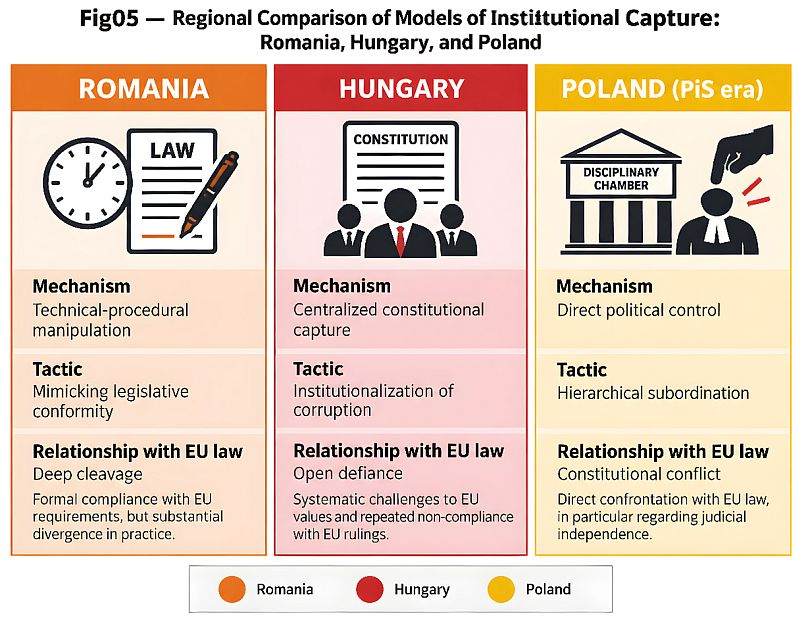 Figure 5. Regional Comparison of Models of Institutional Capture: Romania, Hungary, and Poland
Legend: The figure is organized in three columns. Romania: a pictogram with a clock and a pen modifying a law; the explanatory text is “Technical-procedural manipulation.” Hungary: a pictogram with a rewritten constitution and an oligarchy; the explanatory text is “Centralized constitutional capture.” Poland (PiS era): a pictogram with a Disciplinary Chamber and a judge under pressure; the explanatory text is “Direct political control.” Above each column is indicated the relationship with EU law: “deep cleavage” for Romania, “open defiance” for Hungary, “constitutional conflict” for Poland. The red shades mark conflicts, orange the cleavage, and yellow the defiance.
Figure 5 suggests that, while in Hungary and Poland the threat to the rule of law is visible and publicly assumed, in Romania it is hidden in procedural technicalities, which makes detection and countering more difficult for professionals in the field of national security.
6. THE “TOUCHED PIECE” RULE IN THE HANDLING OF CRIMINAL CASES
6.1 The Ideal Type: Irreversible Touching
In the normative model of the rule of law, the rule is similar to that in chess. Once the criminal prosecution body “touches” a case — by starting criminal prosecution, by indictment, by ordering preventive measures — the procedure acquires irreversibility. It must be carried through to the end according to the law. Withdrawal or annulment are not excluded, but are subject to strict and verifiable legal conditions (Fuller, 1964).[28]
In Romanian law, this logic is visible, for example, in the binding jurisprudence of the High Court of Cassation and Justice regarding the application of art. 309 of the Code of Criminal Procedure: the conclusion by which the court rules on the legality and merits of preventive measures must include, in the minutes, the solution and the reasons; the minutes bind the court and constitute the basis for judicial review; the absence of the minutes entails absolute nullity. In other words: the “touching” of the case judge — deliberation — produces binding effects, and retroactive “arrangement” is not permitted (High Court of Cassation and Justice, 2005).[29]
6.2 Practice: Selective Touching and Retroactive J’adoube
In reality, in cases of economic and organized crime, the rule functions differentially (Passas, 2017).28
First level: heavy pieces (protected). These are entities or persons whose “move” would produce systemic effects: banks, large employers, political-economic networks, public figures with key functions. For these pieces, the J’adoube exception is activated — but not in its correct procedural form (announced before touching), but in retroactive forms: agreements to defer criminal prosecution, solutions of non-indictment, constitutional interventions that change prescription rules after the case has been touched.
Second level: medium pieces (demonstrative). These can be touched and moved when it is necessary to demonstrate that “no one is above the law.” They serve to produce visible legitimation: the press reports convictions, institutions report progress, external partners are satisfied. But their selection remains dependent on the political and economic cost of the move.
Third level: bottom pieces (exposed). Here the pièce touchée rule applies in its most severe form: touching produces a move, and the move is irreversible. This level ensures the function of producing legitimacy: the system appears functional because it punishes visibly and consistently.
The differentiated application of the pièce touchée rule in the handling of criminal cases can be illustrated by the three-level representation in Figure 6.
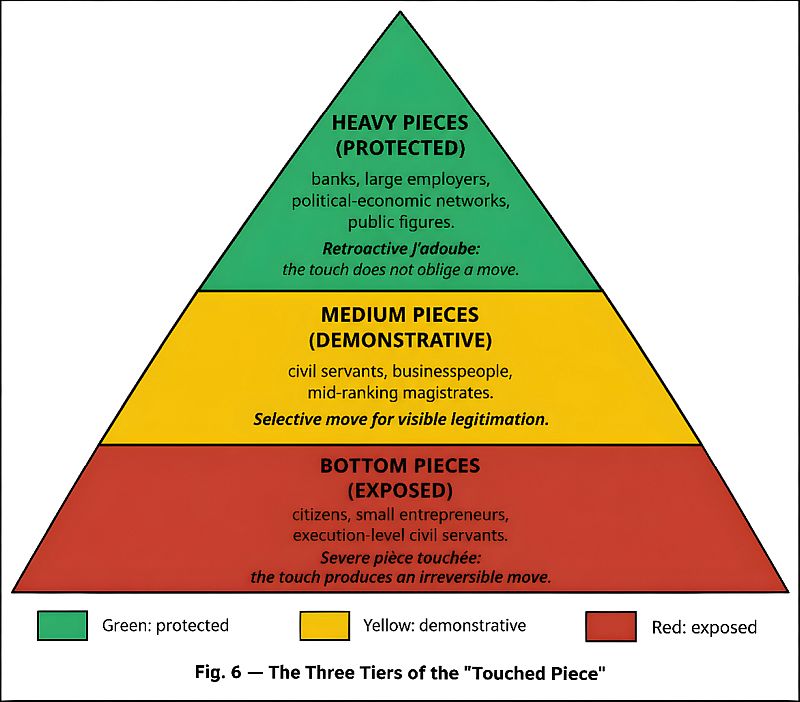 Figure 6. The Three Tiers of the “Touched Piece”: Heavy (Protected), Medium (Demonstrative), and Bottom (Exposed) Pieces
Legend: The figure is organized as a pyramid with three superimposed tiers. The upper level – Heavy pieces (protected), marked in green, includes banks, large employers, political-economic networks, and public figures with key functions; the explanatory text is “Retroactive J’adoube: the touch does not oblige a move.” The middle level – Medium pieces (demonstrative), marked in yellow, includes civil servants, businesspeople, and mid-ranking magistrates; the explanatory text is “Selective move for visible legitimation.” The lower level – Bottom pieces (exposed), marked in red, includes citizens, small entrepreneurs, and execution-level civil servants; the explanatory text is “Severe pièce touchée: the touch produces an irreversible move.” The position on the vertical indicates the degree of institutional protection.
Figure 6 highlights that the pièce touchée rule is not applied uniformly: while bottom pieces are moved irreversibly upon first touch, heavy pieces benefit from a retroactive J’adoube exception, which transforms the legal system into an instrument of selective protection, not of equal application of the law.
6.3 “I Adjust” as Public Justification
The J’adoube rule also has a discursive dimension. When a protected piece is touched, the public justification is never “I decided not to move it,” but “it was an accidental touch,” “a procedural error,” “a misinterpretation of the law.” This rhetoric of retroactive “arrangement” is essential for maintaining the appearance of legality and for avoiding the political cost of an explicit amnesty (Sykes & Matza, 1957).[30]
7. THE INSTITUTIONAL J’ADOUBE PRINCIPLE: A MODEL OF EX ANTE TRANSPARENCY
7.1 From Metaphor to Principle
The FIDE rule of chess is precise: intentional contact with a piece produces a procedural consequence, and adjustment is permitted only if the intention to adjust is expressed beforehand, through the formula j’adoube (FIDE, 2023).30 Transposed metaphorically into governance, this rule suggests a fundamental principle of the legitimate exercise of public power: no significant intervention on the rights or interests of a person should be devoid of a verifiable basis, a legitimate purpose, and an effective control mechanism (Fuller, 1964).[31]
Based on the proposed model, we formulate the following definition:
The institutional j’adoube principle represents the obligation of a public authority to make transparent the intention, competence, legal basis, purpose, and limits of an institutional intervention before it produces significant effects on the rights or legitimate interests of a person.
This principle contains five dimensions:
- Intention — What does the institution aim for?
- Competence — Who has the right to act?
- Legal basis — On the basis of which norm?
- Proportionality — How extensive should the intervention be?
- Accountability — Who is responsible for the consequences?
In this formulation, j’adoube becomes a model for ex ante transparency, opposed to the practice of retroactive “arrangement” that characterizes selective impunity (Rose-Ackerman & Palifka, 2016).[32]
The five dimensions of the institutional j’adoube principle are represented graphically in Figure 7.
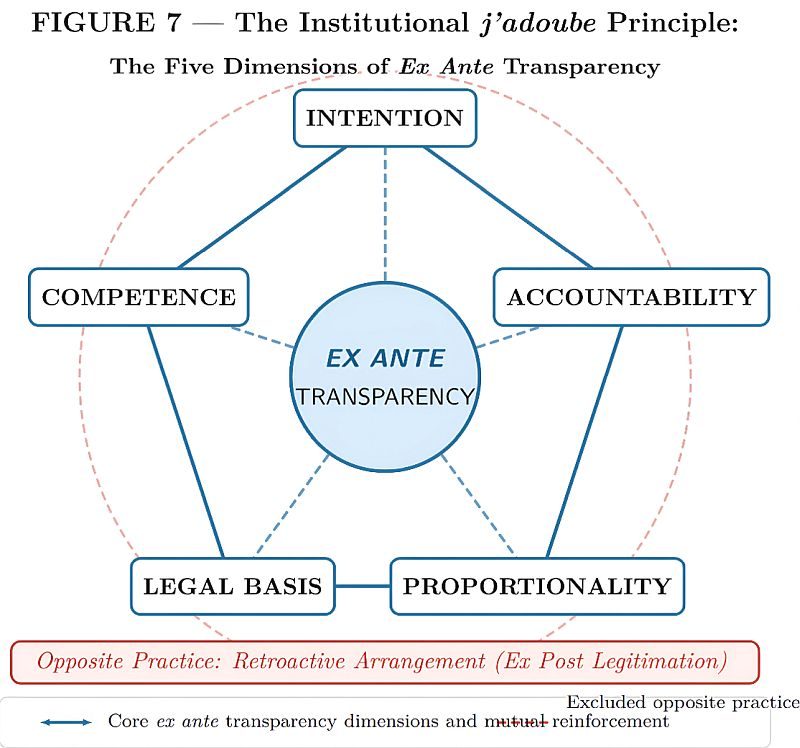 Figure 7. The Institutional j’adoube Principle: The Five Dimensions of Ex Ante Transparency
Legend: The figure presents a pentagon with the five dimensions arranged at the vertices: “Intention,” “Competence,” “Legal Basis,” “Proportionality,” and “Accountability.” At the center of the pentagon is “Ex Ante Transparency.” Bidirectional arrows connect the dimensions to each other, showing their interdependence. Outside the pentagon, marked in red, is positioned the opposite practice: “Retroactive Arrangement.” Colors: blue for transparency, red for retroactive arrangement.
Figure 7 shows that the institutional j’adoube principle is not a simple addition of procedures, but a reconfiguration of the way in which public authority assumes responsibility: each intervention must be preceded by a transparent declaration of intention, competence, legal basis, proportionality, and accountability, which makes retroactive “arrangement” impossible.
7.2 Protected Piece and Unprotected Piece: A Necessary Distinction
The concept of “protected piece” must be used with great caution. In chess, protection is strategic; in law, protection must be universal and equal. Therefore, the protected piece does not mean the privileged person, but the person effectively protected by the guarantees of the rule of law (Fuller, 1964).[33]
Persons who effectively benefit from the following may be considered “protected”:
- access to justice;
• defence;
• judicial independence;
• transparency;
• judicial control;
• whistleblower protection;
• mechanisms of contestation;
• equal procedural treatment.
The “unprotected piece” designates, instead, the actor who does not effectively dispose of such guarantees — either because of their social position, or because of the weakness of the institutions that should protect them (Moghaddam, 2005).[34]
The distinction between the protected piece and the unprotected piece is illustrated in Figure 8.
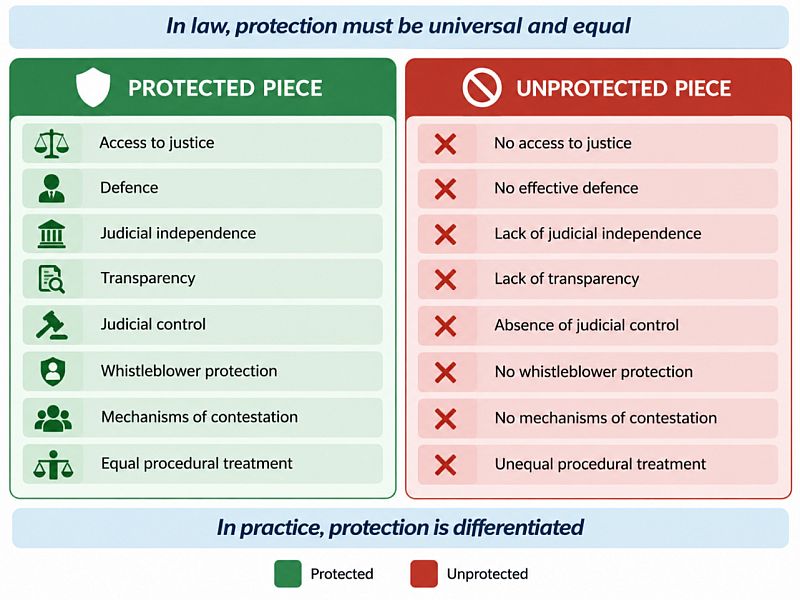 Figure 8. Protected Piece vs. Unprotected Piece: Criteria of Distinction in the Rule of Law
Legend: The figure presents two parallel columns. The left column – Protected piece (green) lists: access to justice, defence, judicial independence, transparency, judicial control, whistleblower protection, mechanisms of contestation, equal procedural treatment. The right column – Unprotected piece (red) indicates the absence of these guarantees, either because of social position or because of the weakness of institutions. Above the columns is written: “In law, protection must be universal and equal.” Below: “In practice, protection is differentiated.”
Figure 8 highlights the fundamental paradox of selective impunity: while the rule of law proclaims the universality of protection, institutional practice produces a systematic distinction between those who effectively benefit from guarantees and those who do not, which transforms the “protected piece” from a legal category into a sociological reality.
8. DISCUSSIONS: IMPLICATIONS FOR PUBLIC POLICIES
8.1 Normative Clarification: From Dysnomia to Nomia
The first condition of any solution is the reduction of normative ambiguity. Dysnomia thrives where rules can be interpreted strategically. The solution is not “more laws,” but more predictable laws and less exposed to retroactive instrumentalization (Passas, 2017).[35] Concretely, this means:
- drastically limiting the possibility that legislative or constitutional changes regarding prescription apply retroactively in ongoing cases;
• introducing clauses of procedural stability for high-gravity corruption cases;
• making public and verifiable reasoning mandatory for solutions of non-indictment in such cases. The self-reinforcing cycle of impunity, which causes dysnomia to reproduce even through its effects, is illustrated in Figure 9.
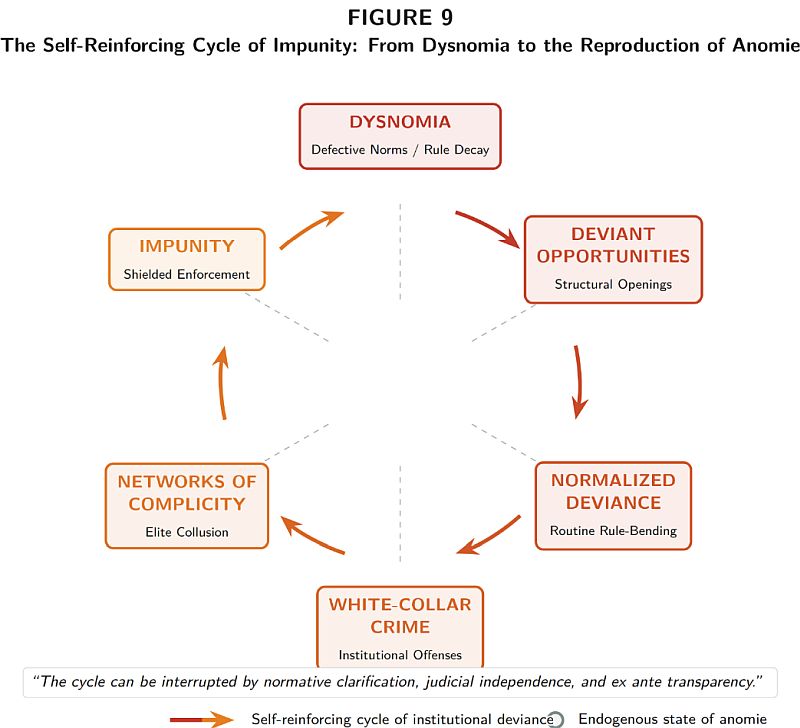 Figure 9. The Self-Reinforcing Cycle of Impunity: From Dysnomia to the Reproduction of Anomie
Legend: The figure presents a circle with six nodes: “Dysnomia” → “Deviant Opportunities” → “Normalized Deviance” → “White-Collar Crime” → “Networks of Complicity” → “Impunity” → back to “Dysnomia.” Circular arrows connect the nodes. At the center of the circle is “Rising Anomie.” Outside the circle is written: “The cycle can be interrupted by normative clarification, judicial independence, and ex ante transparency.” The colors form a gradient from red (dysnomia) to orange (impunity) and back.
Figure 9 shows that impunity is not only a result of dysnomia, but also a cause of it: each act of selective impunity reinforces the perception that norms are negotiable, which widens the zone of normative ambiguity and makes possible new acts of impunity, in a cycle that self-reproduces.
8.2 Exiting the Rhetoric of “Collateral Consequences”
In the case of large economic actors, impunity is frequently justified by invoking collateral consequences: job losses, market destabilization, effects on the national economy. This rhetoric is often empirically unverified. The solution consists in moving this justification from the zone of political discretion to that of jurisdictional control, with clear standards of proof and the obligation to demonstrate, not merely to invoke, proportionality (OECD, 2024b).[36]
8.3 Judicial Independence as Anti-J’adoube Infrastructure
The “protected piece” rule cannot function without the politicization of the decision to touch. Where judges and prosecutors are institutionally protected — through incompatibilities, through appointment and promotion procedures independent of political power, through real protection against abusive disciplinary investigations — the cost of “arrangement” increases. Conversely, where judicial inspectorates can be used as instruments of intimidation, the rule self-reinforces (Melton, 2022).[37]
8.4 Technology as an Auxiliary Instrument — with Precautions
Digital and AI tools can reduce human discretion by automatically flagging patterns of impunity: similar cases solved differently, abnormal delays, concentrations of prescriptions in certain intervals. But technology is not neutral: if introduced into an already captured system, it can become a more efficient instrument for selecting exposed pieces, not for protecting vulnerable ones. Therefore, any technological solution must be accompanied by independent algorithm audits and procedural transparency (Petriashvili, 2026).[38]
8.5 Combating Organized Crime: From Prosecution to Structural Prevention
Finally, combating organized crime cannot be reduced to criminal prosecution. It presupposes:
- reducing criminogenic asymmetries (access to education, social mobility, credit, quality public services);
• regulating vulnerable sectors (public procurement, real estate, gambling, recycling);
• real patrimonial transparency and interoperability between registries;
• protection of witnesses and whistleblowers as infrastructure of courageous touching.
These measures do not eliminate organized crime, but reduce the space for maneuver in which the “protected piece” rule can operate unhindered (UNODC, 2004).[39]
Această abordare este susținută și de poziția exprimată la nivelul Departamentului de Justiție al SUA, care a subliniat importanța enforcement-ului corporativ în combaterea criminalității de guler alb (Monaco, 2024).
The integrated-systemic solutions proposed for restoring the integrity of the rule of law are synthesized in Figure 10.
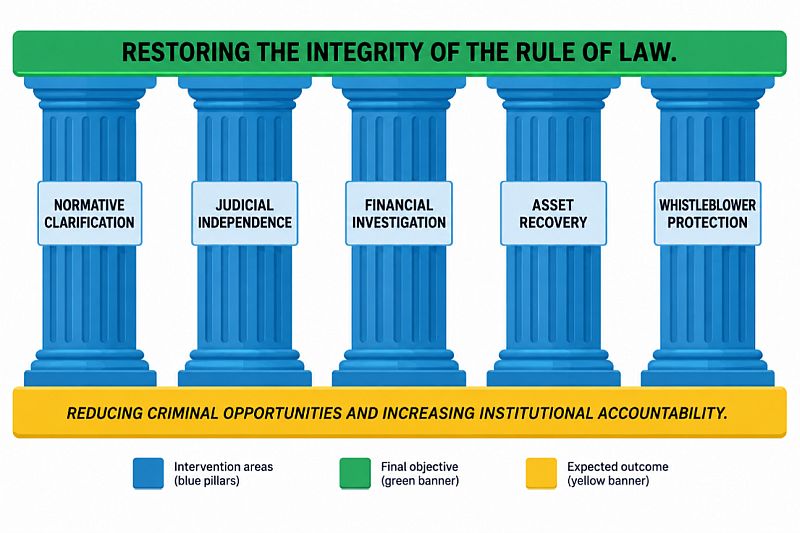 Figure 10. Integrated-Systemic Solutions: Five Pillars of Intervention for Restoring the Integrity of the Rule of Law
Legend: The figure presents five vertical columns (five pillars): (1) “Normative Clarification” (from dysnomia to nomia); (2) “Judicial Independence” (anti-J’adoube); (3) “Financial Investigation” (tracking criminal profit); (4) “Asset Recovery” (extended confiscation);
(5) “Whistleblower Protection.” Above the five pillars is written: “Restoring the Integrity of the Rule of Law.” Below: “Reducing Criminal Opportunities and Increasing Institutional Accountability.” Colors: blue for the pillars, green for the final objective.
Figure 10 suggests that no isolated solution is sufficient: normative clarification without judicial independence remains formal; judicial independence without financial investigation remains incapable of reaching criminal profit; and asset recovery without whistleblower protection remains an image operation. Only simultaneous action on the five pillars can interrupt the self-reinforcing cycle of impunity.
8.6 Limitations of the Research
The first limitation is the conceptual character of the pièce touchée model. The metaphor does not represent a consecrated legal or criminological category and requires further empirical validation. The second limitation concerns the use of aggregate data: statistics on criminal cases do not always allow for the causal identification of the reason why a procedure lasted a certain period. The third limitation is the difference between the perception of corruption and the effective incidence of corruption. The fourth limitation concerns the concept of “impunity,” which must be operationalized with caution and must not be automatically equated with any acquittal, classification, or prescription. The fifth limitation is the impossibility of deducing the collective criminal intention of an institution from the mere existence of controversial judicial results. The sixth limitation is the lack, in its current form, of an individual database that would allow for statistical testing of the hypotheses (European Commission, 2026).[40]
8.7 Recommendations for Further Research
Based on the limitations identified and the results of the present study, several priority directions for future research are outlined:
- Empirical validation of the pièce touchée model. Future research should empirically test the proposed model, using combined quantitative and qualitative methods. It would be useful to build a database that includes variables such as: type of piece (protected vs. unprotected), duration of procedures, solutions pronounced, presence of prescription, status of actors involved. Statistical analysis could verify whether the distribution of solutions differs significantly depending on the position of the piece on the board of power.
- Comparative studies at the regional level. Extending the comparative analysis to other states in Central and Eastern Europe (for example, Bulgaria, Croatia, Slovakia, Czechia) would allow for the identification of common patterns and specific differences in the application of the “J’adoube” tactic. It would also be useful to compare with states outside the EU that have undergone similar transitions.
- Psychosocial analysis of institutional actors. Future research could investigate, through in-depth interviews and discourse analyses, how magistrates, prosecutors, and political decision-makers justify their actions in the context of selective impunity. It would be relevant to explore the mechanisms of moral neutralization and how they perceive the boundary between legality and legitimacy.
- Evaluation of the impact of technological tools. As AI and digital tools are implemented in judicial systems, it would be useful to evaluate their impact on reducing human discretion and selective impunity. Future research could analyze whether these tools contribute to increasing transparency or, on the contrary, to creating new forms of arbitrariness.
- Longitudinal studies on the careers of magistrates. It would be relevant to longitudinally track the careers of magistrates who applied CJEU decisions in conflicts with superior national courts, in order to evaluate the personal and professional costs of institutional resistance.
- Analysis of public discourse and mass media. Future research could analyze how mass media and social networks contribute to legitimizing or delegitimizing selective impunity, as well as their role in shaping public perception of justice.
- Development of indicators for measuring dysnomia. It would be useful to construct quantitative and qualitative indicators for measuring institutional dysnomia, which would allow for the comparison of legal systems from different states and the monitoring of their evolution over time.
- Evaluation of public policy interventions. Future research could evaluate the real impact of the measures proposed in this article (strengthening financial investigation, asset recovery, whistleblower protection, depoliticization of judicial inspection) on reducing selective impunity. Pilot studies and impact evaluations in states already implementing such measures would be useful.
These research directions would contribute to the consolidation of a field of study still insufficiently explored – applied psychology in national security, with emphasis on the psychosocial mechanisms of impunity and on strategies for strengthening institutional resilience.
9. CONCLUSIONS
The chess rule of the “touched piece” is more than a metaphor. It expresses a fundamental legal principle: touching produces obligation, and obligation is irreversible. In systems affected by dysnomia, this principle is tacitly replaced by another: touching produces obligation only for pieces that do not matter.
The pathological chain described in this article, namely: structural anomie → adaptive deviance → social pathology → organized crime → institutionalized impunity, is not a fatality. It can be interrupted where norms become clear, where institutions are protected from political pressures, and where retroactive “arrangement” is no longer possible. In chess terms: where J’adoube must be announced before touching, not invoked after it.
The Romanian case of prescription and pressures on judges who applied European law illustrates the stake: it is not just about a few thousand cases, but about the very meaning of the rule of law. A state in which the touched piece no longer moves is not a state in which justice is delayed; it is a state in which justice has been replaced by another rule — unwritten, but perfectly functional.
For applied psychology in the field of national security, this analysis has significant practical implications. Professionals in the field must be prepared to recognize the subtle forms of institutional undermining, to understand the psychosocial mechanisms that make selective impunity possible, and to contribute to the development of intervention strategies that strengthen institutional resilience. National security is not only a matter of defense against external threats; it is also a matter of internal integrity and respect for the rules that make society possible (Moghaddam, 2005).[41]
ACKNOWLEDGMENTS
The authors thank the persons and institutions that supported the documentation, writing, and editorial preparation of this manuscript. No person who does not meet the criteria for authorship is presented as a co-author.
DECLARATIONS
Author Contributions
Both authors contributed equally to all stages of the conception, documentation, analysis, writing, and revision of this article. The division of tasks below reflects complementary areas of expertise, not a hierarchy of contribution.
Tihan Mihaela Laura and Tihan Eusebiu Jean jointly conceived the research design, developed the theoretical framework, conducted the documentary and criminological analysis, integrated the specialized literature, and interpreted the empirical and institutional data. Both authors contributed equally to the drafting of the manuscript, the critical revision of its intellectual content, the preparation of the scientific apparatus (notes, tables, figures), and the final approval of the version to be published.
Roles (CRediT): Both authors share equal responsibility for Conceptualization; Methodology; Formal analysis; Investigation; Writing – original draft; Writing – review & editing; Visualization; Supervision; Project administration.
Both authors approved the final version and assume full and equal responsibility for the content.
Funding
This research received no external funding.
Conflict of Interest
The authors declare no conflict of interest.
Generative Artificial Intelligence Use Statement
Generative AI-assisted tools were used for editorial assistance in structuring, language refinement, and preparation of the manuscript from the supplied source material. The authors remain fully responsible for the originality, accuracy, integrity, citations, analysis, interpretation, and conclusions of the manuscript. Generative AI is not listed as an author or co-author.
Ethics Approval and Informed Consent
The study analyzed a supplied textual document and did not recruit human participants, collect interviews, administer psychological tests, or process clinical records. Therefore, informed consent from research participants was not applicable to the present document analysis. If future versions include identifiable human materials, appropriate ethical review and informed consent or a documented exemption must be obtained.
Data Availability
The primary qualitative corpus is the document supplied by the authors for analysis. No personal participant dataset was generated. Any future media or image corpus should be documented and archived in accordance with copyright, privacy, and ethical requirements.
All illustrations (Figures 1–10) and tables (Table 1) are original works of the authors, created especially for this article. They do not contain identifiable elements of real persons and are not reproductions of copyrighted materials.
BIBLIOGRAPHIC REFERENCES
- Ashworth, A., & Horder, J. (2013). Ashworth’s Principles of Criminal Law (7th ed.). Oxford University Press.
- Bandura, A. (1986). Social foundations of thought and action: A social cognitive theory. Prentice-Hall.
- Braithwaite, J., & Fisse, B. (1985). Varieties of responsibility and organizational crime. Law & Policy, 7(3), 315-343. https://doi.org/10.1111/j.1467-9930.1985.tb00293.x
- Calderoni, F., Campedelli, G. M., Comunale, T., & Marchesi, M. (2020). Recruitment into organised criminal groups: A systematic review. Australian Institute of Criminology.
- Comisia Europeană. (2026). 2026 Rule of Law Report: Country chapter on the rule of law situation in Romania. Directorate-General for Justice and Consumers.
- Curtea Constituțională a României. (2018). Decizia nr. 297/2018. Monitorul Oficial al României.
- Curtea Constituțională a României. (2022). Decizia nr. 358/2022. Monitorul Oficial al României.
- Direcția Națională Anticorupție. (2026). Raport privind activitatea desfășurată în anul 2025. DNA.
- Durkheim, É. (1951). Suicide: A study in sociology (J. A. Spaulding & G. Simpson, Trans.). Free Press. (Original work published 1897)
- Engdahl, O. (2022). Dramaturgical self-efficacy and opportunity structures for white-collar crime. Crime, Law and Social Change, 78, 25-44. https://doi.org/10.1007/s10611-021-10012-z
- Fédération Internationale des Échecs (FIDE). (2023). FIDE Laws of Chess. FIDE Handbook. https://handbook.fide.com/chapter/E012023
- Fuller, L. L. (1964). The morality of law. Yale University Press.
- Goldstein, A., & Knight, J. (2026). Ambiguous Actorhood: Twenty-First Century Firms and the Evasion of Responsibility. Sociological Science, 13, 63–88.
- Henry, S., & Anastasia, D. J. M. (2025). Essential Criminology (5th ed.). Routledge.
- Hirschi, T. (1969). Causes of delinquency. University of California Press.
- Innes, A. (2013). The political economy of state capture in Central Europe. JCMS: Journal of Common Market Studies, 52(1), 88–104. https://doi.org/10.1111/jcms.12079
- Înalta Curte de Casație și Justiție. Secțiile Unite. (2005). Decizia nr. XVII/2005. Publicată în Monitorul Oficial al României, Partea I, nr. 119/2006.
- Melton, J., & Ginsburg, T. (2014). Does De Jure Judicial Independence Really Matter? A Reevaluation of Explanations for Judicial Independence. Journal of Law and Courts, 2(2), 187–217. https://doi.org/10.1086/676999
- Merton, R. K. (1938). Social structure and anomie. American Sociological Review, 3(5), 672-682. https://doi.org/10.2307/2084686
- Merton, R. K. (1957). Social theory and social structure (Rev. ed.). Free Press.
- Moghaddam, F. M. (2005). Psychological processes and the security of nations. In F. M. Moghaddam & A. J. Marsella (Eds.), Understanding terrorism: Psychosocial roots, consequences, and interventions (pp. 17–33). American Psychological Association.
- Monaco, L. O. (2024). Testimony before the Senate Committee on the Judiciary concerning corporate criminal enforcement [Congressional testimony]. U.S. Department of Justice. justice.gov
- Near, J. P., & Miceli, M. P. (1985). Organizational dissidence: The case of whistle-blowing. Journal of Business Ethics, 4(1), 1–16. https://doi.org/10.1007/BF00382668
- (2024a). Anti-corruption and integrity outlook 2024. OECD Publishing. https://doi.org/10.1787/968587cd-en
- (2024b). Combatting high-level corruption in Eastern Europe: Insights and solutions. OECD Publishing. https://doi.org/10.1787/3c82f87d-en
- (2024c). Implementing the OECD Anti-Bribery Convention: Phase 2 report: Romania. OECD Publishing. https://doi.org/10.1787/37adcf9a-en
- (2024d). OECD economic surveys: Romania 2024. OECD Publishing. https://doi.org/10.1787/106b32c4-en
- Passas, N. (2000). Global anomie, dysnomie, and economic crime: Hidden consequences of neoliberalism and globalization in Russia and around the world. Social Justice, 27(2), 16-44.
- Passas, N. (2017). Global anomie theory and crime. In S. Henry & M. M. Lanier (Eds.), The Essential Criminology Reader (pp. 189-204). Westview Press / Routledge.
- Petriashvili, I. (2026). Deploying Artificial Intelligence to Curb Corruption in the European Union. International Anti-Corruption Academy Research Paper Series. https://www.iaca.int/media/attachments/2026/02/02/iaca-research-paper-series_irakli-petriashvili1.pdf
- Morselli, C., Gabor, T., & Kiedrowski, J. (2010). The Factors That Shape Organized Crime. Public Safety Canada. https://publications.gc.ca/site/eng/412240/publication.html
- Rădulescu, S. (2016). Corruption – A pathology of power and of development. Romania’s case. Revista Română de Sociologie, 27(3-4), 165–190.
- Rose-Ackerman, S., & Palifka, B. J. (2016). Corruption and government: Causes, consequences, and reform (2nd ed.). Cambridge University Press.
- Sadurski, W. (2019). Poland’s Constitutional Breakdown. Oxford University Press. doi.org
- Schrager, L. S., & Short, J. F. (1978). Toward a sociology of organizational crime. Social Problems, 25(4), 407–419. https://doi.org/10.2307/800492
- Sutherland, E. H. (1940). White-collar criminality. American Sociological Review, 5(1), 1–12. https://doi.org/10.2307/2083937
- Sykes, G. M., & Matza, D. (1957). Techniques of neutralization: A theory of delinquency. American Sociological Review, 22(6), 664–670. https://doi.org/10.2307/2089195
- Twyman-Ghoshal, A. (2021). Global anomie theory. In H. N. Pontell (Ed.), Oxford Research Encyclopedia of Criminology and Criminal Justice. Oxford University Press. https://doi.org/10.1093/acrefore/9780190264079.013.665
- S. Department of State. (2024). 2024 Investment Climate Statements: Romania. Bureau of Economic and Business Affairs.
- S. Department of State. (2026). 2026 Investment Climate Statements: Romania. Bureau of Economic and Business Affairs. state.gov
- United Nations Office on Drugs and Crime. (2004). United Nations Convention against Transnational Organized Crime and the protocols thereto. unodc.org
- United Nations Office on Drugs and Crime.(2012) Transnational organized crime: The globalized illegal economy. unodc.org
- van Onna, J. H. R. (2018). Blurred Lines: A Study of White-Collar Crime Involvement [Doctoral dissertation, Vrije Universiteit Amsterdam]. VU Research Portal.
- van Onna, J. H. R., & Denkers, A. J. M. (2018). Social bonds and white-collar crime: A two-study assessment of informal social controls in white-collar offenders. Deviant Behavior, 39(10), 1207–1224. https://doi.org/10.1080/01639625.2017.1420455
- Volkov, M. (2025, April 2). Transforming the Justice Department. Corruption, Crime & Compliance. https://blog.volkovlaw.com/2025/04/transforming-the-justice-department/
Notes
[3] The “Pièce touchée” rule is defined in Article 4 of the FIDE Laws of Chess: “If the player deliberately touches a piece of their own, they must move that piece, provided a legal move exists.” See FIDE (2023).
[4] The “J’adoube” exception allows adjusting a piece without being obliged to move it, provided the intention is announced before touching. See FIDE (2023).
[5] The European Commission (2026) analyzes four dimensions: the judicial system, the anti-corruption framework, media pluralism, and institutional mechanisms of checks and balances.
[6] Passas (2017) introduces the concept of dysnomia as strategically exploitable normative ambiguity, distinct from classical anomie.
[7] Applied psychology in national security is an interdisciplinary field that integrates psychological knowledge with evaluation and intervention practices in security contexts. See Moghaddam (2005) for a comprehensive introduction.
[8] High-level corruption affects the state’s capacity to exercise its fundamental functions. See Rose-Ackerman & Palifka (2016) for an economic and institutional analysis.
[9] The principle according to which touching produces obligation is central to the legal theory of the rule of law. See Fuller (1964) for a discussion of the morality of law.
[10] Merton’s theory of structural anomie explains deviance as an adaptive response to the disjunction between goals and means. See Merton (1938).
[11] Hirschi’s social control theory inverts the classical criminological question. See Hirschi (1969).
[12] Passas (2017) develops the concept of dysnomia as strategically exploitable normative ambiguity.
[13] Merton (1957) extended the theory of anomie to explain modes of adaptation to structural strain, including deviant innovation.
[14] Passas (2000) developed global anomie theory, showing that neoliberal globalization produces criminogenic asymmetries.
[15] Passas (2017) distinguishes between anomie (absence of norms) and dysnomia (ambiguity and selectivity of norms).
[16] Morselli, Gabor, and Kiedrowski (2010) notes that symbiotic relationships between criminal and legitimate actors have become more organized, and the distribution of income within criminal organizations is extremely unequal.
[17] Sykes & Matza (1957) identify five techniques of neutralization: denial of responsibility, denial of injury, denial of the victim, condemnation of the condemners, appeal to higher loyalties.
[18] Hirschi (1969) identifies four elements of the social bond: attachment, commitment, involvement, and belief.
[19] van Onna (2020) applies social control theory to white-collar offenders, proposing four distinct moral mechanisms: moral nonchalance, supreme moral judgement, moral blockade, and adapted moral self.
[20] Ashworth (2013) discusses the principles of criminal law, including prescription as a procedural guarantee.
[21] The Romanian Constitutional Court (2018, 2022) issued decisions no. 297/2018 and no. 358/2022, which created a legislative vacuum regarding prescription.
[22] The U.S. Department of State (2026) reports on the extinguishment of criminal action in over 9,635 high-level corruption cases through prescription.
[23] The European Commission (2026) highlights the cleavage between national court decisions and CJEU rulings.
[24] Petriashvili (2026) analyzes the unequal implementation of AI tools in combating corruption in the EU.
[25] Innes (2013) analyzes the political economy of state capture in Central Europe.
[26] Sadurski (2019) documents the constitutional breakdown in Poland during the PiS era.
[27] The European Commission (2026) highlights the subtle character of the Romanian model of institutional capture.
[28] Fuller (1964) discusses the moral principles underlying the legal order, including the irreversibility of assumed obligations.
[29] The High Court of Cassation and Justice (2005) established that the minutes bind the court and constitute the basis for judicial review.
[30] Passas (2017) explains how dysnomia makes selective impunity possible.
[31] Sykes & Matza (1957) describe the techniques of neutralization that allow offenders to justify their actions.
[32] FIDE (2023) defines the pièce touchée rule in Article 4 of the Laws of Chess.
[33] Fuller (1964) discusses the moral principles underlying the legal order.
[34] Moghaddam (2005) discusses the importance of identifying zones where the rule of law functions only formally.
[35] Passas (2017) argues that reducing normative ambiguity is the first condition for combating selective impunity.
[36] OECD (2024b) recommends moving justifications regarding collateral consequences from the zone of political discretion to that of jurisdictional control.
[37] Melton (2022) examines the relationship between formal and real judicial independence.
[38] Petriashvili (2026) analyzes the unequal implementation of AI tools in combating corruption in the EU.
[39] UNODC (2004) recommends an integrated approach to combating organized crime.
[40] The European Commission (2026) emphasizes the need for nuanced conclusions based on institutional data.
[41] Moghaddam (2005) emphasizes the importance of recognizing subtle forms of institutional undermining for national security.
Tihan, Laura Mihaela; Tihan, Eusebiu Jean (2026), The Mechanics of the “Touched Piece” in State Capture: A Psychosociological and Anthropological Analysis of Impunity in White-Collar Crime in Romania, Intelligence Info, 5:4, https://www.intelligenceinfo.org/en/the-mechanics-of-the-touched-piece-in-state-capture/, DOI: 10.58679/II42065,


Leave a Reply